A. Aubrey Bodine's Photographic Legacy Showcases Artistic Mastery and Historical Documentation
September 16th, 2025 2:00 PM
By: Newsworthy Staff
The enduring significance of A. Aubrey Bodine's 1952 photograph of Ellicott City's B & O Railroad platform highlights his innovative techniques and lasting impact on both documentary photography and artistic expression.
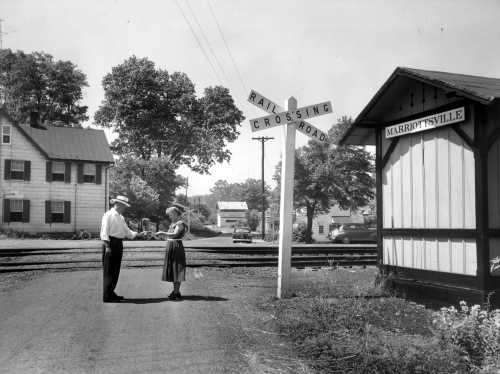
The photograph "Ellicott City and the B & O Railroad (1952)" by A. Aubrey Bodine captures a historical view of the ancient stone buildings from Ellicott City's once busy B & O Railroad platform, serving as a testament to both the region's industrial heritage and Bodine's exceptional photographic artistry. This image, available through www.aaubreybodine.com, represents just one example from Bodine's extensive portfolio that blends documentary precision with creative vision.
In photographic circles worldwide, A. Aubrey Bodine was regarded as one of the finest pictorialists of the twentieth century, with his pictures exhibited in hundreds of prestigious shows and scores of museums while winning awards against top competition. His approach to photography was revolutionary for his time—he believed photography could be a creative discipline and studied art principles at the Maryland Institute College of Art, treating the camera and darkroom equipment as tools similar to a painter's brush or sculptor's chisel.
Bodine's career began in 1923 covering stories for the Baltimore Sunday Sun, during which he traveled throughout Maryland creating remarkable documentary pictures of numerous occupations and activities. What set his work apart was the artistic quality often evident in his composition and lighting effects, far exceeding the usual standards of newspaper photography. His technical craftsmanship was extraordinary, as he constantly experimented with his tools—some pictures were composed directly in the camera viewfinder, while others involved elaborate darkroom techniques including dye work, intensifiers, pencil marking, and even scraping the negative to achieve desired effects.
The philosophical foundation of Bodine's work centered on the idea that he didn't take pictures but made pictures, selectively choosing features that suited his sense of mood, proportion, and design. This approach allowed him to manipulate elements like adding clouds photographically or making other alterations to serve the artistic vision rather than strict documentary accuracy. More than 6,000 photographs spanning Bodine's 47-year career are available for viewing and ordering as reprints and note cards through www.aaubreybodine.com, preserving his legacy for future generations.
The continued accessibility of Bodine's work through digital platforms ensures that his contributions to both documentary photography and artistic expression remain relevant and appreciated. His ability to transform ordinary scenes into artistic compositions while maintaining historical authenticity makes his photographs valuable resources for understanding mid-20th century American life and the evolution of photographic art. The Ellicott City railroad photograph specifically serves as an important historical record of transportation infrastructure and urban development during that period.
Source Statement
This news article relied primarily on a press release disributed by citybiz. You can read the source press release here,