Supply Chain Faces Dual Threats of Inland Congestion and Rising Cargo Theft During Unusual Peak Season
September 17th, 2025 3:41 PM
By: Newsworthy Staff
The September ITS Logistics Port/Rail Ramp Index reveals that while import volumes have declined, front-loaded freight moving inland is causing rail congestion and increasing vulnerability to record-high cargo theft and fraud during a period of regulatory uncertainty.
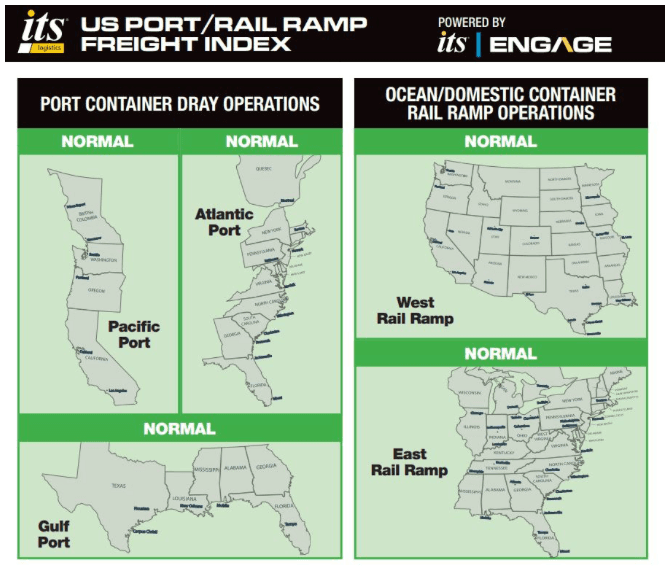
The September ITS Logistics US Port/Rail Ramp Freight Index indicates a shift in traditional peak season patterns, with import volumes dipping slightly in August and eliminating the typical late Q3 to early Q4 drayage surge for 2025. Instead, front-loaded freight is now moving inland from coastal areas, creating congestion in key rail lanes and boosting domestic truckload activity in regions with extensive distribution center networks. This redistribution of inventory coincides with escalating risks of cargo theft and fraud, compounded by regulatory changes affecting tariff policies and shipping operations.
Paul Brashier, Vice President of Global Supply Chain for ITS Logistics, noted that shippers have already moved inventory into North America through various frontloading surges, leading to high inbound ocean and domestic container volumes. This activity is driving higher outbound truckload rates from logistics hubs such as Southern California, Dallas, Chicago, and Atlanta. U.S. container imports for August totaled 2,519,722 TEUs, a 1.6% year-over-year increase but a 3.9% decline from July's near-record levels. The National Retail Federation projects a 5.6% decrease in total inbound volume for 2025 due to tariff policies, potentially resulting in a 17.5% drop in the final months of the year, with demand dips expected to continue through October.
These trends occur amid regulatory turmoil, including the end of the de minimis exemption on August 29, which subjected 92% of U.S. cargo shipments to new duties and prompted nearly a dozen countries and shipping companies to temporarily pause shipments. Additionally, a U.S. appeals court ruled most tariffs issued by former President Donald Trump illegal, with a Supreme Court decision expected in November. A stay on the tariff ruling is in place until October 14, coinciding with the next phase of USTR port fees on Chinese vessel owners and operators at https://ustr.gov. This uncertainty complicates preparations for the 2026 RFP season.
Inland freight movement faces significant challenges, as increases in ocean containers and intermodal equipment are likely to cause congestion in key rail lanes for months. ITS Logistics advises shippers to onboard additional drayage and cross-dock capacity for time-sensitive shipments to avoid delays. Concurrently, organized cargo theft and freight fraud have reached record levels. The Association of American Railroads reported a 40% surge in railway theft in 2024, costing Class I rail operators over $100 million, while Verisk CargoNet noted a 13% increase in truck-based fraud incidents in Q2 2025, citing rises in organized crime and targeting of consumer goods at https://www.cargonet.com.
Brashier emphasized that stolen inventory and fraud incidents during peak season create delays costing shippers more than the lost load itself, underscoring the need for carriers with real-time visibility and rigorous fraud-prevention standards. The ITS Logistics US Port/Rail Ramp Freight Index, which forecasts container and dray operations for Pacific, Atlantic, and Gulf regions, along with West and East Inland rail ramp operations, is available at https://www.its4logistics.com, providing critical insights for navigating these complex supply chain dynamics.
Source Statement
This news article relied primarily on a press release disributed by citybiz. You can read the source press release here,