White House Excludes TSMC and Micron from Equity Stake Demands While Targeting Intel
August 24th, 2025 3:05 PM
By: Newsworthy Staff
The Trump administration is pursuing equity stakes in select U.S. chipmakers receiving CHIPS Act funding but will exempt TSMC and Micron from such demands, focusing instead on Intel while raising concerns about foreign investment retaliation and subsidy returns.
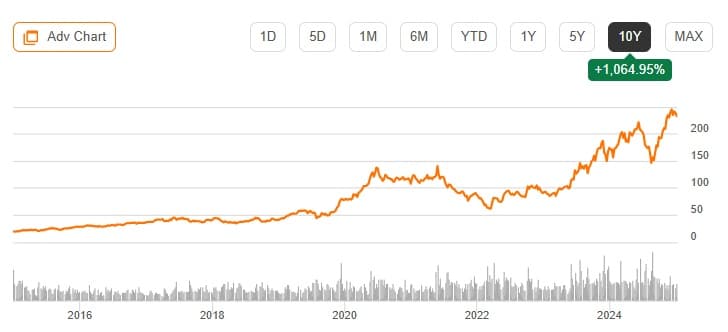
The Trump administration is pursuing equity stakes in certain U.S. chipmakers that receive funding through the CHIPS Act but will exempt Taiwan Semiconductor Manufacturing Co. (NYSE: TSM) and Micron Technology Inc. (NASDAQ: MU) from such demands, according to a White House official. Commerce Secretary Howard Lutnick stated that the government may seek up to a 10% stake in Intel Corp. (NASDAQ: INTC), asserting that taxpayers deserve a share of the profits generated from federal support. This approach marks a shift from the Biden administration's strategy, which limited subsidies to grants without equity requirements.
TSMC, a critical supplier to major technology firms like Apple and Nvidia, has committed to substantial investments in the United States, including a pledge of $100 billion in new funding this spring, supplementing the $65 billion already allocated to its fabrication plants in Arizona. Similarly, Micron expanded its U.S. manufacturing plans in June, underscoring its role in strengthening domestic semiconductor production. However, TSMC executives have privately considered returning subsidies if compelled to relinquish equity, as reported by individuals familiar with the discussions. This potential backlash highlights the delicate balance between government intervention and foreign investment incentives.
The Commerce Department previously awarded significant subsidies under the CHIPS Act, including $6.6 billion to TSMC, $6.2 billion to Micron, and $4.75 billion to Samsung, aimed at boosting domestic chip manufacturing and reducing reliance on foreign sources. Despite these allocations, a substantial portion of the $52.7 billion program remains unspent, raising questions about the efficiency and impact of the initiative. The exclusion of TSMC and Micron from equity demands may mitigate risks of international friction, particularly with Taiwan, a key ally in semiconductor supply chains, but the focus on Intel could signal a broader strategy to assert greater control over U.S.-based companies.
Market reactions reflected the announcement, with TSMC shares rising 1.3% to $142.68, Micron dipping 0.4% to $97.45, and Intel gaining 0.9% to $40.82 on Thursday. This policy divergence between administrations underscores ongoing debates over the role of government in private industry and the implications for global competitiveness, as equity stakes could influence corporate autonomy and future investment decisions in the critical semiconductor sector.
Source Statement
This news article relied primarily on a press release disributed by citybiz. You can read the source press release here,