Workforce Education Strategist Calls for Community College Transformation to Address National Skills Gap
March 3rd, 2026 12:36 AM
By: Newsworthy Staff
Dr. Andrew Johnson III argues that community colleges must fundamentally transform workforce education programs to bridge America's growing skills gap by creating dynamic pathways between education and employment.
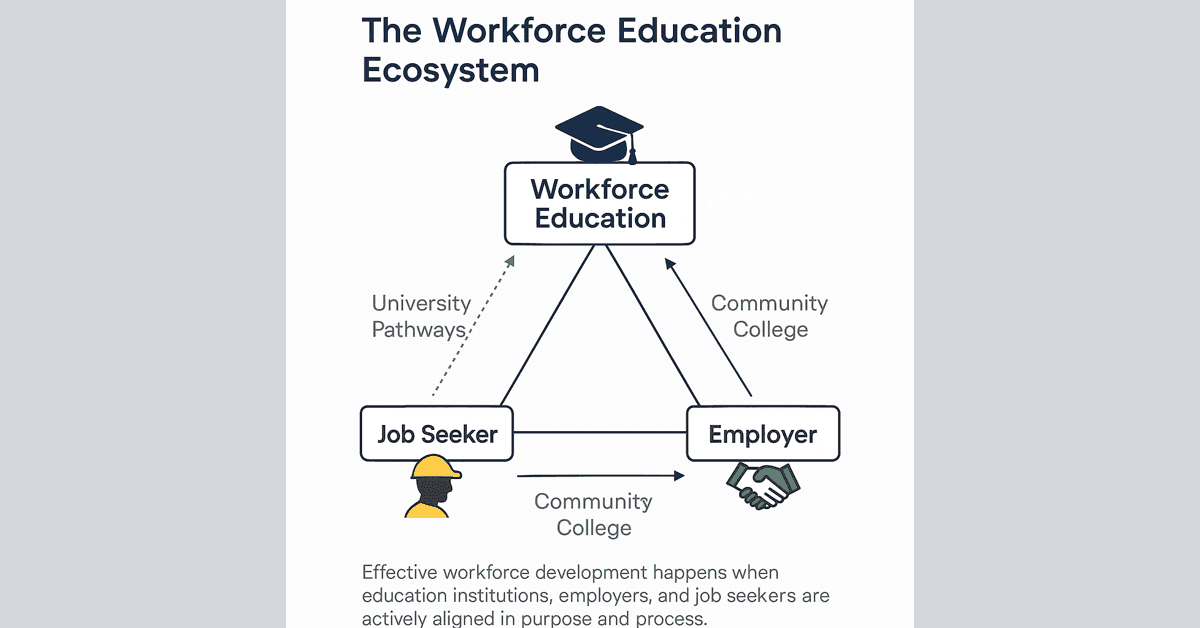
In a comprehensive analysis of America's workforce challenges, Dr. Andrew Johnson III, who serves as college Dean of Workforce Instruction at Lone Star College–University Park, outlines the urgent need to transform workforce education to address the nation's growing skills gap. His article, "Workforce Education in Modern Motion: Rebuilding America's Talent Pipeline," emphasizes that community colleges must become dynamic bridges between education and employment to sustain economic vitality and provide meaningful career pathways. Johnson highlights the accelerating pace of technological change, from AI and robotics to advanced manufacturing, as a fundamental challenge for workforce educators. "Adaptability must become the cornerstone of workforce education," Johnson writes. "Programs cannot be static, and employers cannot shoulder talent development alone. Community colleges are uniquely positioned to serve as the critical link between training and hiring."
Recent data underscores the urgency of this transformation. Job postings requiring a college degree dropped from 20.4% to 17.8% between 2019 and 2024 according to the Indeed Hiring Lab. Additionally, 70% of employers report difficulty finding skilled talent according to the ManpowerGroup 2025 Global Talent Shortage Report, and nearly every U.S. region faces shortages across skilled trades, manufacturing, energy, and emerging technology sectors according to BYF.org. Johnson notes, "America is shifting toward skills-based hiring, where competency and certification often outweigh traditional academic credentials. The workforce of 2035 is being shaped right now, higher education, employers and communities must coordinate deliberately."
Johnson calls on community colleges to integrate workforce education into their core mission, moving beyond siloed divisions of customized corporate training, continuing education, and academic programs. "When credentials do not stack into certificates and certificates do not stack into degrees, students lose momentum and institutions lose relevance," he argues. "We must build seamless pathways that reflect how modern Americans learn, work and upskill." Effective workforce development requires deep, reciprocal partnerships with employers—not just advisory boards or occasional donations. "Employers need talent pipelines that deliver job-ready workers and colleges need employer validation to ensure program relevance," Johnson explains. "Strengthening direct partnerships, not relying on staffing intermediaries, is key to building sustainable regional ecosystems."
At its core, workforce education is about transforming lives. Quoting Lean Manufacturing expert Guy Jones, Johnson frames the mission: "Our objective is to convert hope into employment with precision, speed and integrity - guiding students from aspiration to certification, from certification to employment and from employment to lifelong career success." Johnson concludes that community colleges, when fully aligned with workforce development, can unlock community potential, strengthen regional industries, and secure America's competitive standing globally. "If we embrace this mission, we won't just fill the skills gap, we'll redefine America's workforce landscape for generations."
Source Statement
This news article relied primarily on a press release disributed by Newsworthy.ai. You can read the source press release here,