New Atmospheric Correction Method Could Finally Deliver on Precision Agriculture’s Promise
Resolv, Inc. paper in Remote Sensing shows surface reflectance imagery can cut false alarms, lower costs, and enable fully automated crop analytics at scale.




Hartford, SD (Newsworthy.ai) Friday Apr 17, 2026 @ 7:00 AM CDT

Dr. David P. Groeneveld
“Reliable surface reflectance imagery, Resolv argues, is what finally closes the gap.”
Satellite imagery has long been pitched as the future of precision agriculture, yet farmers keep getting burned by unreliable data and prices that do not pencil out. A new open-access paper from Resolv, Inc. argues both problems have the same fix: make accurate surface reflectance the standard output, not the exception.
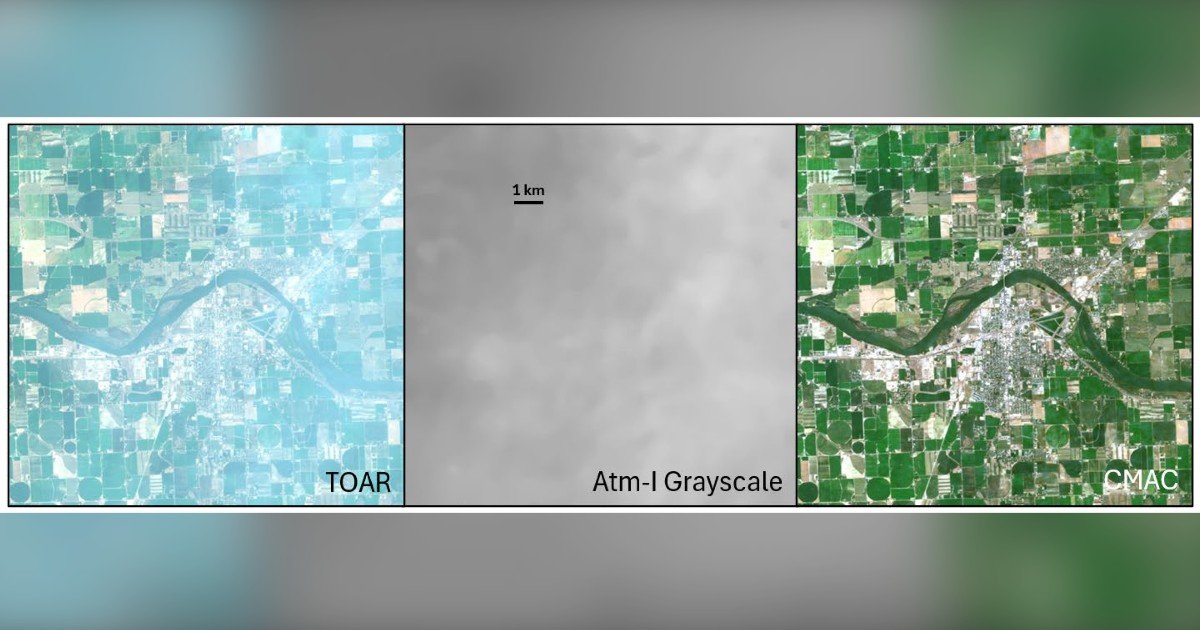
The paper, “Surface Reflectance: An Image Standard to Upgrade Precision Agriculture,” was published March 30 in Remote Sensing by Dr. David Groeneveld and Tim Ruggles of Resolv. It benchmarks three atmospheric correction methods on Sentinel-2 imagery and lays out how a reliable correction standard opens the door to low-cost, fully automated crop intelligence.
Dr. David P. Groeneveld
“Reliable surface reflectance imagery, Resolv argues, is what finally closes the gap.”
Why Atmospheric Correction Matters
Light travels through a constantly shifting atmosphere before reaching a satellite sensor, and that journey distorts the signal. Atmospheric correction reverses the distortion and returns the data to surface reflectance, the measurement actually needed for accurate crop analytics. When that correction is off, small clouds and shadows look like crop problems, triggering false alarms. Scouting each one costs time and money farmers cannot spare, and automated analysis has been unable to separate bad data from real trouble. Precision agriculture has stalled as a result.
Benchmark Results
The Resolv team compared two mainstream tools, Sen2Cor and FORCE, against CMAC, the closed-form method for atmospheric correction developed by Resolv and now being readied for commercial release. Across a wide range of atmospheric conditions, CMAC produced precise and accurate surface reflectance estimates. The two mainstream methods showed systematic error, over-correcting clear images and under-correcting hazy ones. Because of how those tools are formulated, the bias had gone undetected until this paper surfaced it.
What Reliable Surface Reflectance Unlocks
The paper walks through proof-of-concept applications that reliable surface reflectance makes possible:
Automated removal of clouds and cloud shadows, cutting false alarms before they reach the farmer.
An automated crop start-date index that could replace growing-degree-day scheduling across millions of acres, letting growers plan treatments and harvest well in advance.
Stable NDVI readings even when atmospheric water vapor varies, which matters for the many satellites carrying only a broadband near-infrared sensor.
Soil capability classification straight from imagery, so seed and fertilizer can be applied in variable rates that balance yield against input cost.
Accurate remote crop irrigation based on the crops greenness and reference evaporatranspiration that can boost yield, save water and reduce irrigation cost.
Taken together, these applications give precision agriculture a real path to paying for itself.
A Tiered Approach to Imagery Costs
High image costs are the second barrier, and the paper proposes a tiered model to bring them down. Tier 1 uses free, high-quality Sentinel-2 imagery corrected to surface reflectance. Tier 2 fills the gaps with commercial smallsat data when clouds block Sentinel-2. The smallsat data can be resampled to match Sentinel-2, verified, and billed automatically, with no human in the loop.
The result cab be a turnkey pipeline that orders, corrects, analyzes, tracks, and bills imagery across vast regions without manual touchpoints. Service costs drop sharply while image sales volume grows. Crop insurance could serve as a natural channel, streamlining loss adjustment and bringing more acreage under active management without compromising grower privacy.
The Bottom Line
Remote sensing has spent years over-promising and under-delivering for agriculture. Reliable surface reflectance imagery, Resolv argues, can finally closes the gap.
About Resolv, Inc.
Resolv develops atmospheric correction technology for satellite imagery, with a focus on making precision agriculture analytics trustworthy and affordable at scale. Initial development of CMAC was funded by National Science Foundation SBIR. CMAC can now be prepared for commercial rollout. Resolv has other peer reviewed papers for review on their website https://resolvearth.com.
Media Contact
Justin McKenzie
Email Contact
(210) 748-2312
Paper reference: Groeneveld, D. and Ruggles, T. “Surface Reflectance: An Image Standard to Upgrade Precision Agriculture.” Remote Sensing, March 30, 2026.
Frequently Asked Questions
- What are the latest advancements in atmospheric correction methods for precision agriculture?
- Resolv, Inc. has developed a new closed-form method called CMAC for atmospheric correction, which provides more accurate surface reflectance estimates compared to existing methods like Sen2Cor and FORCE. This advancement is detailed in their paper published on March 30, 2026, in Remote Sensing, and it is being prepared for commercial rollout.
- How are companies reducing the cost of satellite imagery for precision agriculture?
- Resolv, Inc. proposes a tiered cost model that combines free, high-quality Sentinel-2 imagery with commercial smallsat data, corrected to surface reflectance. This approach aims to reduce service costs while increasing image sales volume, making it more affordable for agriculture applications.
- What new applications are enabled by reliable surface reflectance imagery in agriculture?
- Reliable surface reflectance imagery unlocks applications like automated cloud removal, a crop start-date index, stable NDVI readings, soil capability classification, and accurate remote crop irrigation. These innovations can significantly enhance precision agriculture, offering a path to self-sustaining cost models.
Media Contact

Other Recent News for SBIR Advisors
- Tempest Droneworx to Showcase Advanced AI-Driven Situational Awareness Platform at eMerge Americas
- Supply Veins Returns to eMerge Americas 2026 with AI-Native Procurement for Defense and Mobility Industry
- Bowler Pons to Showcase Defense-Born Security Innovation at eMerge Americas 2026
- eMerge Americas 12th Annual Conference in Miami: Tech Meets National Security
- Renu Robotics to Showcase Autonomous Mowing Technology at eMERGE Americas 2026