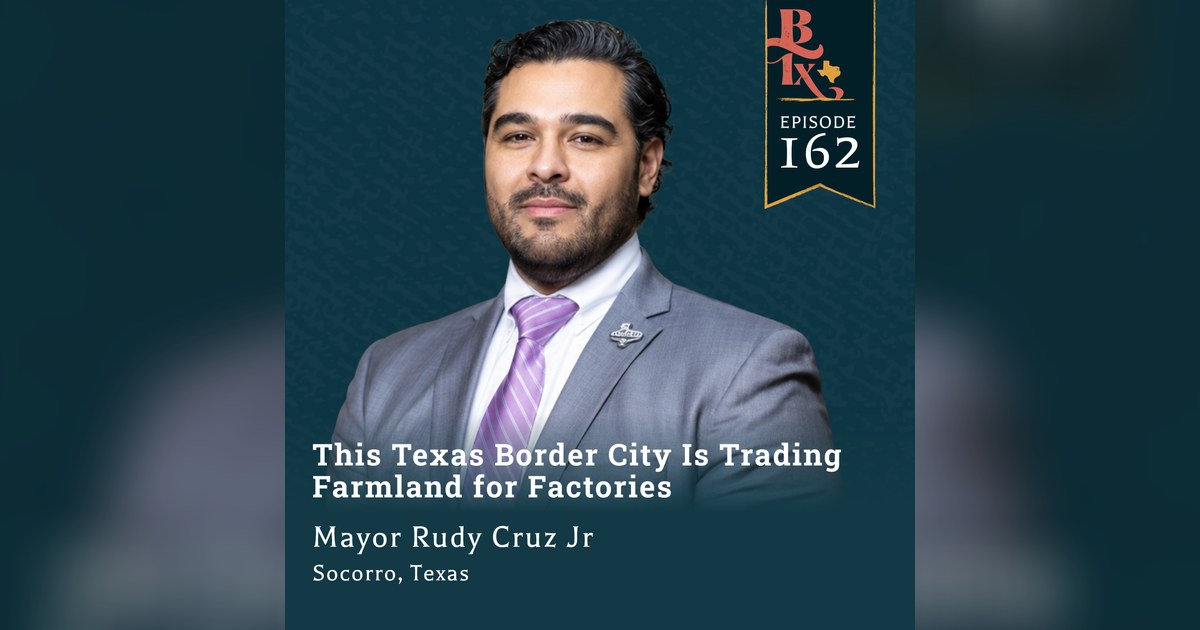
Socorro Mayor Rudy Cruz on Trading Salty Farmland for a Foreign Trade Zone
Mayor Rudy Cruz joins host Justin McKenzie to explain how Socorro, Texas, a border city east of El Paso, is converting fading farmland into a foreign trade zone, courting manufacturers and logistics firms, and preserving 400-year-old adobe missions while its high schoolers graduate with associate's degrees.





Socorro, TX (Newsworthy.ai) Tuesday Jul 21, 2026 @ 7:17 AM CDT
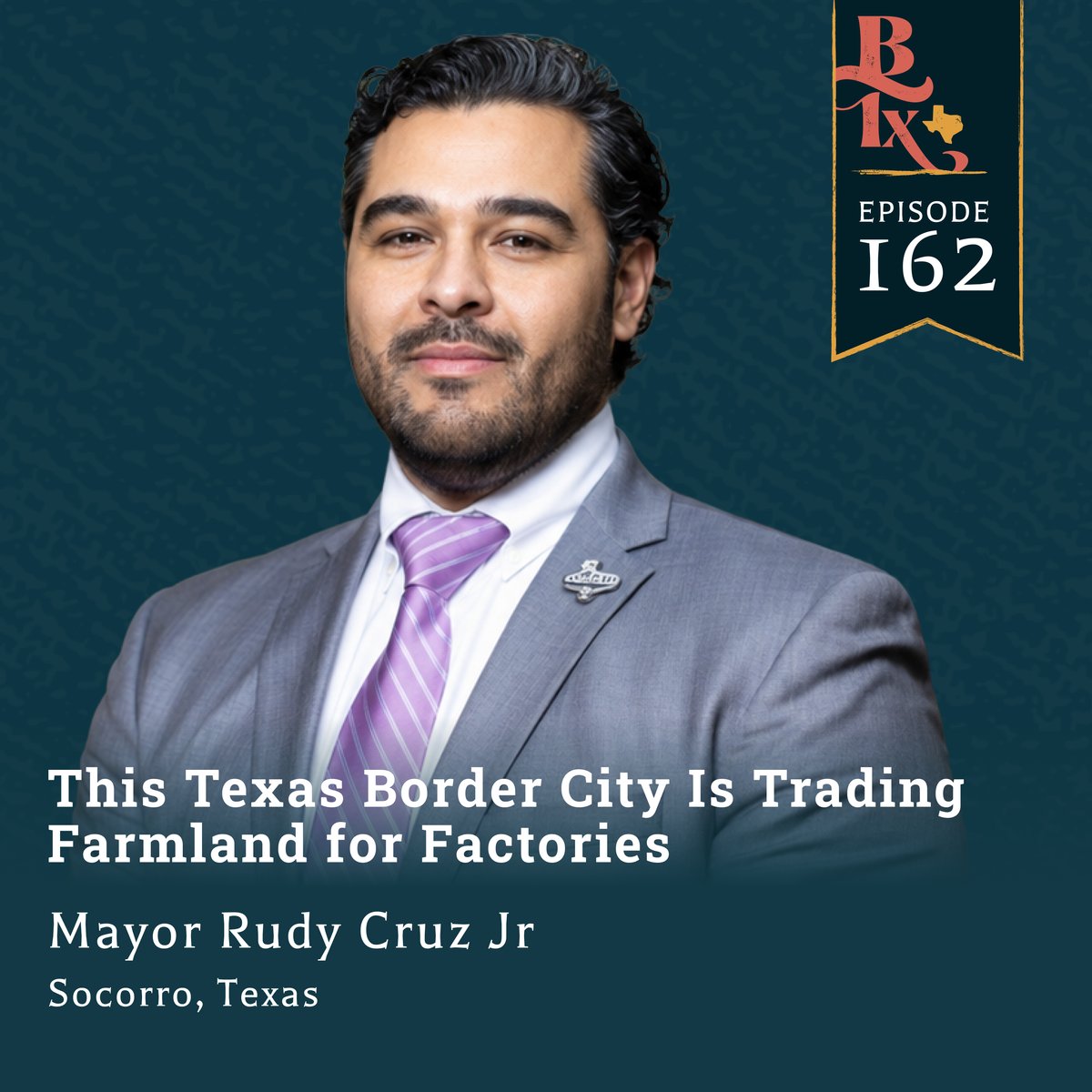
The Building Texas Show — This Texas Border City Is Trading Farmland for Factories
Photo: Justin McKenzie
“You want to see a building that was built by people with their own hands 400 years ago? Come down here and visit it. It's an adobe structure built with these natural elements of wood and mud, but at the same time, it tells a story of the people that still reside here.”
The latest episode of The Building Texas Show, titled "This Texas Border City Is Trading Farmland for Factories," published July 13, 2026, hosted by Justin McKenzie, brings listeners inside Socorro, Texas, a small border city just east of El Paso where generations of irrigated farmland are being sold off to developers. Mayor Rudy Cruz explains why families are walking away from the tractor, how the city is standing up a foreign trade zone, and how a community anchored by 400-year-old adobe missions is rebuilding its economy without erasing its history.
McKenzie and Cruz work through the specific pressures reshaping Socorro today, pulling in the people and institutions driving the shift. Topic threads include:
The Building Texas Show — This Texas Border City Is Trading Farmland for Factories
Photo: Justin McKenzie
“You want to see a building that was built by people with their own hands 400 years ago? Come down here and visit it. It's an adobe structure built with these natural elements of wood and mud, but at the same time, it tells a story of the people that still reside here.”
- Why salty irrigation water, fewer allocations, and triple-digit summers are pushing grandkids off inherited farmland into commercial and industrial deals.
- The city's new foreign trade zone and the manufacturing and logistics tenants feeding cross-border trade with Mexico.
- The partnership between Socorro and Ysleta del Sur Pueblo, one of only three federally recognized tribes in Texas.
- Socorro ISD's 6A programs sending students out of high school with associate's degrees and barber licenses, and Fort Bliss's interest in busing students in.
Cruz speaks plainly about the tradeoffs. On the shrinking fields, he tells McKenzie, "It's sad to see the farmland going away... the water isn't what it used to be. There's a lot of salt here and the salt kills off a lot of those plants." On the pitch to visitors, he offers a fuller picture:
You want to see a building that was built by people with their own hands 400 years ago? Come down here and visit it. It's an adobe structure built with these natural elements of wood and mud, but at the same time, it tells a story of the people that still reside here.
The conversation goes deep on how Socorro's civic and tribal economies reinforce each other. Cruz, who previously worked as a small business development specialist for Ysleta del Sur Pueblo, describes building incubators on the former Braceros Farm site so local entrepreneurs can grow past rent, payroll, and insurance costs before entering the wider market. He also credits the tribe with securing federal highway dollars to rehabilitate an irrigation bridge the city could not have funded alone. On the Mission Trail, a nine-mile corridor linking three missions, homes have been converted into restaurants, bistros, and breweries pouring pecan and pomegranate beer, keeping 300 to 400 years of foodways alive.
About The Building Texas Show
The Building Texas Show, hosted by Justin McKenzie, profiles the mayors, founders, tribal leaders, and operators shaping the next chapter of the Texas economy. Each episode digs into the specific decisions, deals, and cultural stakes behind the state's growth, from border trade zones to small-town Main Streets. The episode is available now wherever podcasts are heard.
Frequently Asked Questions
- Why is Socorro's farmland disappearing?
- Mayor Cruz points to a mix of environmental and generational pressures. Irrigation allocations have shrunk, the water carries heavy salt that kills crops, and summers now regularly hit triple-digit temperatures. On top of that, the grandkids who inherited the fields don't want to work a tractor in the heat, so families are selling to developers converting the land to commercial and industrial use.
- What is Socorro doing with the land instead?
- The city has established a foreign trade zone to take advantage of its position on the Mexico border, and it is recruiting manufacturing and logistics tenants along with food-industry businesses. Cruz frames the shift as a way to bring sustainable jobs so the next generation can stay in Socorro rather than leaving the community for work elsewhere.
- Who is Ysleta del Sur Pueblo and how does it work with the city?
- Ysleta del Sur Pueblo is Mayor Cruz's tribe and one of only three federally recognized Indian tribes in Texas. The tribe is checkerboarded across El Paso County and inside Socorro's boundaries. Cruz notes the tribe used federal highway dollars, which the city could not have accessed alone, to help rehabilitate an irrigation bridge connecting Texas highways to residential areas.
- What makes Socorro Independent School District stand out?
- Socorro ISD is a 6A district and one of the largest in El Paso County, with Socorro High School as its flagship. Cruz says students are graduating with associate's degrees and barber-school credentials, saving families college costs. Fort Bliss commanding generals are touring the facilities because they want to bus military-installation students to Socorro High for those programs.
- What is the Braceros Farm project?
- Cruz is working to build a small business incubator on the former Braceros Farm site in Socorro, modeled on the incubator system he helped run for Ysleta del Sur Pueblo. The goal is to give local entrepreneurs a subsidized environment to grow past rent, payroll, and insurance costs before competing in the broader market, though funding from federal, state, and local sources remains a challenge.
- What should visitors do on the Mission Trail?
- Cruz invites travelers off I-10 to walk the nine-mile corridor connecting three missions, including a 400-year-old adobe structure built by hand from wood and mud. Along the trail, converted homes now house restaurants, bistros, and breweries serving pecan and pomegranate beer and dishes prepared as they were 300 to 400 years ago. The reservation's cultural center hosts social dances and horno-baked bread.
Media Contact

Other Recent News for The Building Texas Show
- Beyond the Integration Tax: The idhubs Team is Rewiring the Business Operating System for the AI Era
- Fredericksburg High Students Raise $21K Launching Six Startups in INCubatoredu Debut
- From Jobsite to Pitmaster: Sloan Rinaldi's 1909 Texas BBQ Legacy
- San Marcos Buys 200 Acres to Extend Runway, Eyes Aerospace Future
- Why San Antonio Pool Buyers Are Ditching Concrete for Fiberglass