LiftFund Launches $10K Grants for Hill Country Flood-Hit Small Businesses
On The Building Texas Show, LiftFund President and CEO Amy Hereford joins host Justin McKenzie in San Antonio to unveil the 2026 Texas Hill Country Flood Relief Program, offering grants up to $10,000 across 16 counties and explaining why small business must be prioritized in disaster recovery.





San Antonio, TX (Newsworthy.ai) Tuesday Aug 11, 2026 @ 12:00 PM CDT
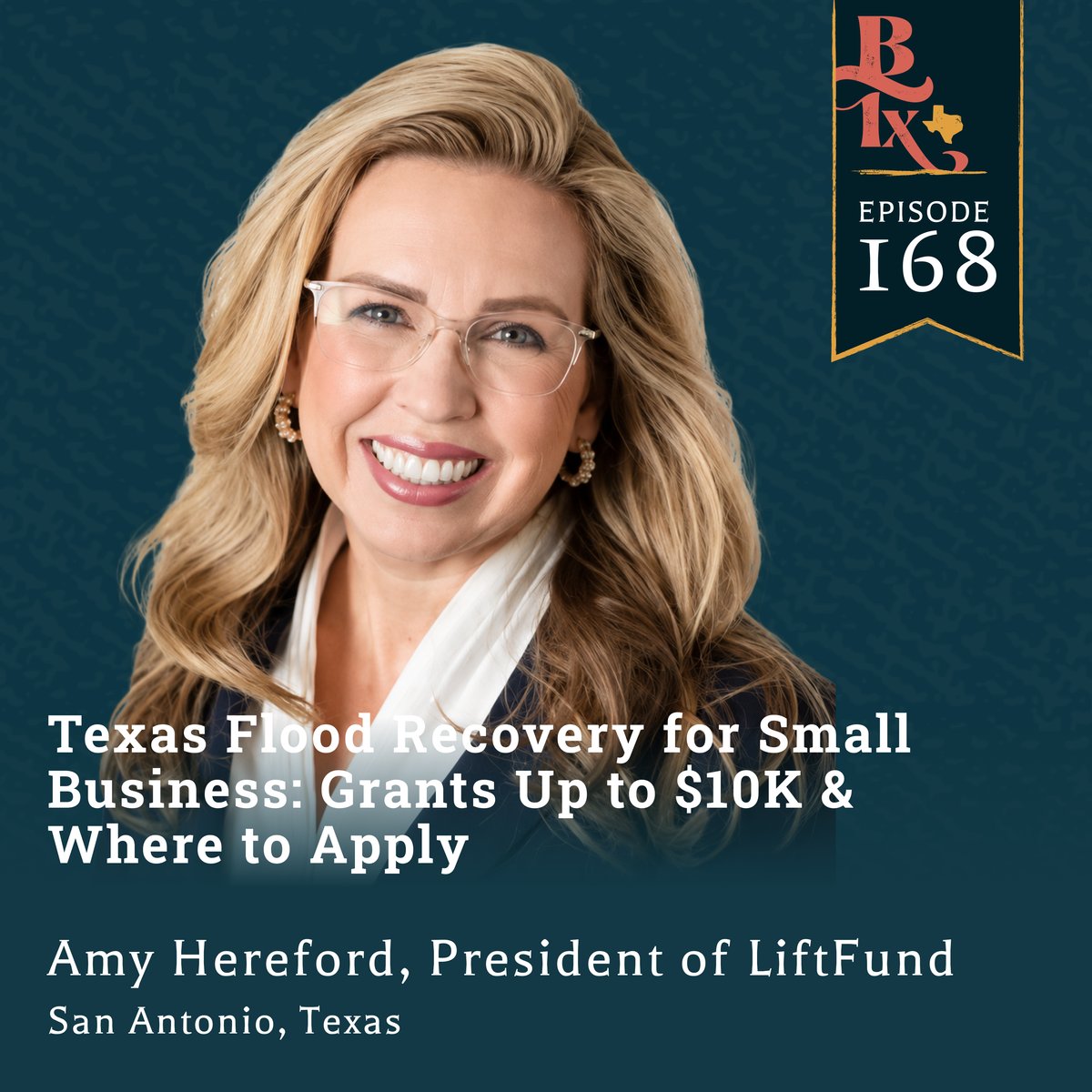
The Building Texas Show — Texas Flood Recovery for Small Business: Grants Up to $10K & Where to Apply
Photo: Justin McKenzie
“The faster you help a small business, the faster you secure the entire recovery of the community. Because in many communities, especially in rural areas, those small businesses are going to be the majority employers.”
The latest episode of The Building Texas Show, titled 'Texas Flood Recovery for Small Business: Grants Up to $10K & Where to Apply,' hosted by Justin McKenzie, sits down in San Antonio with Amy Hereford, President and CEO of LiftFund. Published August 6, 2026, the conversation arrives as the Texas Hill Country reels from a second major flood in as many years. LiftFund has deployed 525 grants and loans totaling more than $17 million to Hill Country businesses in the past year and is now rolling out the 2026 Texas Hill Country Flood Relief Program.
Hereford walks McKenzie through how the 30-year-old San Antonio nonprofit fills the gap when traditional banks decline early-stage founders, veterans, and creative entrepreneurs. Key threads include:
The Building Texas Show — Texas Flood Recovery for Small Business: Grants Up to $10K & Where to Apply
Photo: Justin McKenzie
“The faster you help a small business, the faster you secure the entire recovery of the community. Because in many communities, especially in rural areas, those small businesses are going to be the majority employers.”
- Grants up to $10,000 for flood-impacted small businesses and nonprofits across 16 eligible counties, including Bandera, Blanco, Kerr, Kendall, Hays, Comal, Uvalde and Gillespie.
- Zero-interest loans made possible when cities, counties and private donors buy down the rate.
- Free technical assistance and a capital readiness questionnaire available at LiftFund.com.
- The threat of predatory lenders and title-loan storefronts targeting cash-strapped founders.
Hereford is blunt about why speed matters after a disaster. Citing LiftFund's data from more than 50 disaster recoveries, she tells McKenzie:
The faster you help a small business, the faster you secure the entire recovery of the community. Because in many communities, especially in rural areas, those small businesses are going to be the majority employers.
She warns that most small businesses carry only about 10 days of cash on hand, and that SBA relief typically arrives after payroll cycles and mortgage payments have already come due.
The episode digs into the ripple math of a shuttered Main Street: an average small business employs roughly four people, each supporting families of about four, and is often linked to 20 other businesses through local supply chains. Hereford references Trinity University economist Dr. Butler, who has publicly endorsed LiftFund's work and named the organization in his planned giving. She and McKenzie also spotlight San Antonio's Alamo Kitchens as a case study in how one commercial-kitchen loan can seed dozens of downstream food entrepreneurs, and discuss second-chance founders, rural daycares, and gap financing for hospitals where banks stop at 80 percent.
About The Building Texas Show
The Building Texas Show, hosted by Justin McKenzie, profiles the founders, funders, and civic builders shaping the Texas economy from Main Street to the Hill Country to the state's biggest metros. Each episode blends startup-ecosystem insight with on-the-ground stories of resilience, capital access, and community development. This episode is available now wherever podcasts are heard, and at buildingtexasshow.com.
Frequently Asked Questions
- What is the 2026 Texas Hill Country Flood Relief Program and who qualifies?
- LiftFund's 2026 program offers grants of up to $10,000 to flood-impacted small businesses and nonprofits in 16 eligible Hill Country counties, including Bandera, Blanco, Burnet, Comal, Edwards, Gillespie, Hays, Kendall, Kerr, Kimble, Llano, Mason, Medina, Menard, Real and Uvalde. Applicants can start at LiftFund.com, where free technical assistance and a capital readiness questionnaire are also available.
- Why does LiftFund emphasize speed in disaster response for small businesses?
- Amy Hereford tells Justin McKenzie that most small businesses carry only about 10 days of cash on hand, while SBA relief often takes six to eight weeks — arriving after payroll and mortgage cycles have already hit. Drawing from LiftFund's data across more than 50 disaster recoveries, she argues that rapidly stabilizing small employers is what secures the recovery of the entire community.
- How does LiftFund offer zero-interest loans, and are they always available?
- Hereford is candid that LiftFund does not offer 0% loans 365 days a year. Instead, cities, counties, the state, and private donors step in to buy down interest rates for specific programs. She encourages entrepreneurs to watch LiftFund.com for announcements when funders come forward to make affordable capital available.
- Who does LiftFund serve that traditional banks often turn away?
- Hereford points to veterans, whose frequent moves and multiple addresses can complicate loan applications, along with creative-industry founders whose success is harder to project on a five- or ten-year horizon. LiftFund also backs second-chance entrepreneurs with prior incarceration, rural daycare operators, and even hospitals needing gap financing when banks stop at 80 percent.
- What is the ripple effect of losing a small business in a rural community?
- The episode breaks down the math: an average small business employs about four people, each supporting a family of roughly four, and is often linked to 20 other businesses through local supply chains. When Main Street shutters, tax base erodes, healthcare providers leave, schools lose children, and land ownership transfers — a pattern Hereford says was visible after Hurricane Katrina.
- Why is predatory lending a particular danger for early-stage founders?
- Hereford, an attorney by training, warns that online offers bombard entrepreneurs the moment they start searching for capital, with unfavorable terms buried in fine print. Founders can lock themselves and future generations into debt they don't fully understand. She contrasts this with nonprofit lenders like LiftFund, which pair capital with free education and human support — a costly model no predatory lender replicates.
- How can donors and communities support LiftFund's work beyond taking out a loan?
- Hereford highlights planned giving as a powerful lever, citing Trinity University economist Dr. Butler, who has left a bequest to LiftFund. Cities, counties, the state, and private donors can also fund interest-rate buy-downs or seed standing disaster-relief funds. McKenzie encourages listeners to contact state and federal representatives to advocate for prioritizing small business in disaster recovery frameworks.
Media Contact

Other Recent News for The Building Texas Show
- Beyond the Integration Tax: The idhubs Team is Rewiring the Business Operating System for the AI Era
- Fredericksburg High Students Raise $21K Launching Six Startups in INCubatoredu Debut
- From Jobsite to Pitmaster: Sloan Rinaldi's 1909 Texas BBQ Legacy
- San Marcos Buys 200 Acres to Extend Runway, Eyes Aerospace Future
- Why San Antonio Pool Buyers Are Ditching Concrete for Fiberglass