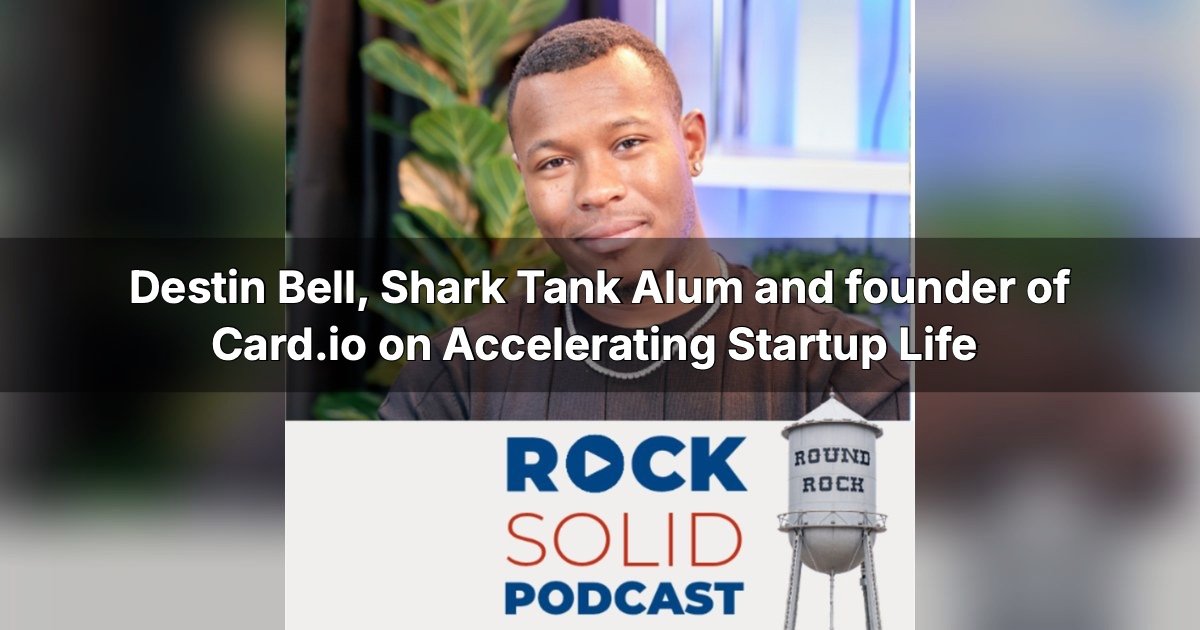
From Homeless to Shark Tank: Destin Bell's Incredible Startup Story
On Rock Solid, Card.io founder Destin George Bell details his unfiltered path from sleeping in his car in Austin to closing a deal with Daymond John and Rashaun Williams on Mark Cuban's final Shark Tank season, plus the co-founder buyout that nearly ended it all.
Round Rock, TX (Newsworthy.ai) Monday Jun 1, 2026 @ 8:00 AM CDT
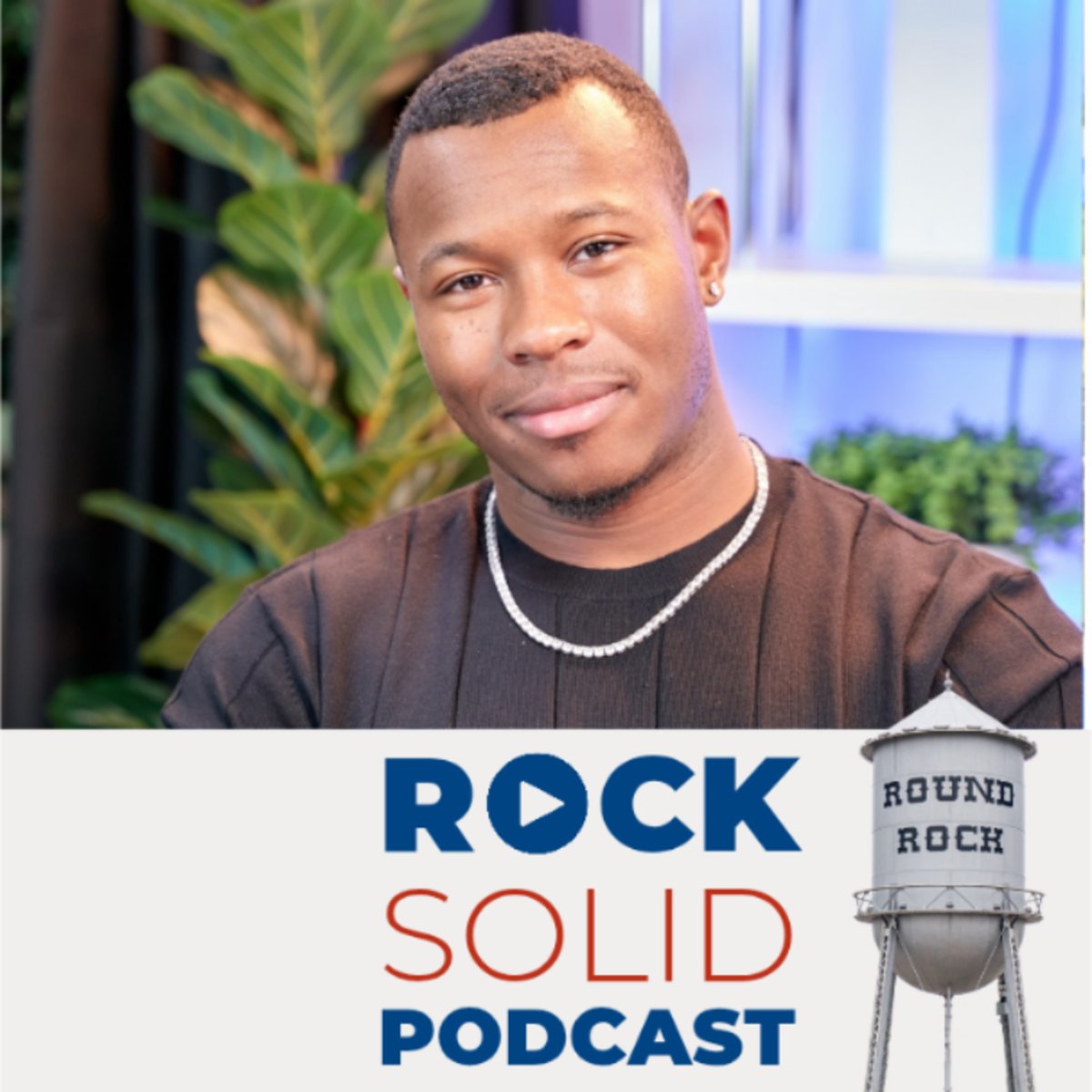
Rock Solid: Round Rock Business Leaders Podcast — 70. Destin George Bell | From Sleeping in His Car to Shark Tank
Photo: Round Rock Studio
“I was sleeping on an air mattress in my dad's attic. Basically, I could sleep in my car in Austin. Both are not great, but one gives me a chance for greatness. I'm gonna take the one with greatness at any moment in time.”
Episode 70 of Rock Solid: Round Rock Business Leaders Podcast, titled 'Destin George Bell | From Sleeping in His Car to Shark Tank,' hosted by Bryan Eisenberg, brings listeners an unvarnished conversation with the Card.io founder who landed a deal during Mark Cuban's final season of Shark Tank. Published April 21, 2026, the episode arrives as Bell takes the reins as Program Manager of the gBETA Round Rock accelerator, making his hard-won lessons on cold outreach, fundraising, and co-founder fit immediately actionable for the next class of Central Texas founders.
The discussion swiftly transitions from highlights to the underlying realities. Bell walks Eisenberg through the moments that defined his trajectory and the ones that almost ended it:
Rock Solid: Round Rock Business Leaders Podcast — 70. Destin George Bell | From Sleeping in His Car to Shark Tank
Photo: Round Rock Studio
“I was sleeping on an air mattress in my dad's attic. Basically, I could sleep in my car in Austin. Both are not great, but one gives me a chance for greatness. I'm gonna take the one with greatness at any moment in time.”
- Moving to Austin broke, sleeping in his car after graduating into COVID on $8 an hour
- Cold DMing his CTO on LinkedIn and securing a first check from the CEO of Pokemon Go
- Pitching Daymond John, Rashaun Williams, and Kevin O'Leary on Shark Tank with his mother beside him
- A $40,000 co-founder buyout that gutted his team slide mid-raise
- How AI tools like Claude and Lovable have rewritten the playbook for non-technical founders
Bell is candid about the fear of going on international television with a product the sharks could shred. He tells Eisenberg the Shark Tank taping was more terrifying than living in his car or cold-emailing a gaming CEO, because the stakes were public and permanent.
You go out there with your baby and you're putting your baby on international television and Mr. Wonderful says it's ugly. And then people listen to them and they clown you. That's a stain on your life forever.
The episode's most substantive stretch unpacks the late-2023 inflection point when Bell's CTO, recruited through a cold LinkedIn DM and married into a higher cost of living in Midtown Manhattan, exited the company. With roughly 10,000 users, a $350,000 raise, an Oracle contract, and a Forbes 30 Under 30 nod, Bell still found himself a solo non-technical founder trying to close an extension round while bug reports piled up. He credits marathon running, yoga, and meditation with separating his self-worth from his valuation, and points to early-stage investors who wrote follow-on checks before he had replaced his engineer. He also drops practical fundraising math from his gBETA cohort, where three of five companies raised a combined $600,000, and warns founders that team chemistry, not tech, is the variable they cannot afford to change.
About Rock Solid: Round Rock Business Leaders Podcast
Produced by Round Rock Studio and hosted by bestselling author and keynote speaker Bryan Eisenberg, Rock Solid spotlights the entrepreneurs, nonprofits, and operators powering Round Rock, Texas. Each episode digs into the real mechanics of building a business in one of the country's fastest-growing communities, from first checks to scaled exits. Episode 70 with Destin George Bell is available now wherever podcasts are heard.
Frequently Asked Questions
- Who is Destin George Bell and what is Card.io?
- Destin George Bell is the founder of Card.io, a consumer app he describes as targeting young, social gamer runner/walker types in large cities. He moved to Austin from Kentucky with no money, slept in his car, and built Card.io to roughly 10,000 users before pitching on Shark Tank during Mark Cuban's final season and landing a deal with Daymond John and Rashaun Williams.
- Why did Bell say pitching on Shark Tank was scarier than sleeping in his car?
- Bell told Eisenberg that cold-emailing a gaming CEO or moving to Austin broke carried little downside, but Shark Tank put him on international television with his mom watching. He feared being publicly called a bad entrepreneur by Mr. Wonderful, Mark Cuban, or Daymond, noting that negative Shark Tank press can follow founders permanently and outweigh what their product actually does.
- What happened during the co-founder buyout that nearly ended Card.io?
- In late 2023, Bell's CTO, whom he had recruited via a cold LinkedIn DM, left after getting married and moving to Midtown Manhattan on a startup salary. Bell paid him $40,000, lost his technical co-founder mid-extension-round, watched bug reports pile up, and saw committed investors start pulling out because the team slide no longer looked viable.
- How does Bell think AI has changed what early-stage founders should focus on?
- Bell argues AI tools like Claude and Lovable have collapsed the barrier to entry, making products homogeneous and easy to clone in a week. As a result, distribution, niche targeting, and messaging matter more than engineering talent. He advises founders to pick one very specific customer with a specific problem, dominate that wedge, then land and expand.
- What results has the gBETA Round Rock accelerator produced under Bell?
- Bell reports that his most recent gBETA cohort saw three of five companies raise capital, totaling roughly $600,000. He frames that as well above the roughly one percent of startups that ever raise venture funding, and positions the program as a way to give Round Rock founders sniper-rifle focus rather than shotgun spray-and-pray strategies.
- What is Bell's number-one warning to early-stage founders?
- Team chemistry. Bell tells Eisenberg that products, markets, messaging, tech stacks, and even cap tables will all change, but the founding team should not. He compares a co-founder split to divorce, says founders should only partner with people they would 'marry' for five to ten years, and believes a stronger second-in-command would have solved 80 percent of Card.io's problems.
Media Contact

Other Recent News for Bryan Eisenberg, bestselling author, international keynote speaker
- Leadership and Innovation: How Kasey Jorgenson is Transforming Real Estate with AI
- Leadership and Legacy: Kristin Stevens on the Future of Round Rock
- Behind the Lens: David Valdez's Stories from the Berlin Wall to Texas Photography
- How Judge Steve Snell is Steering Williamson County's Growth
- Pioneering Marketer Bryan Eisenberg to Discuss AI's Impact on Customer Engagement at YOU x AI Summit