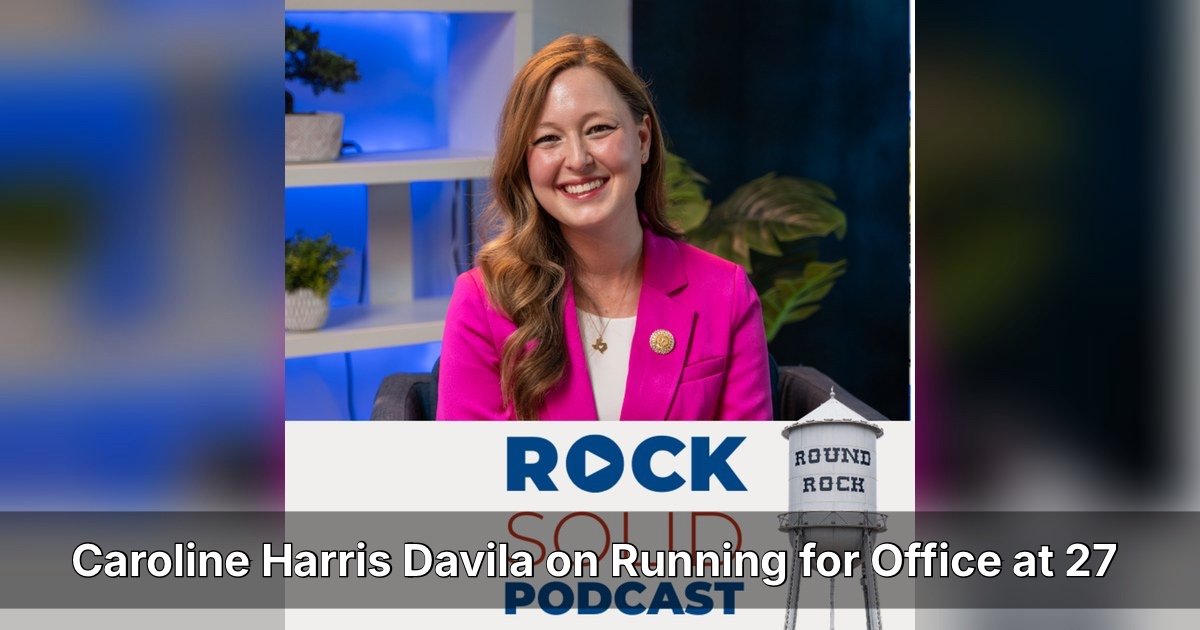
Texas State Rep Caroline Harris Davila: From Fearful Speaker to Community Advocate
Texas State Representative Caroline Harris Davila joins Bryan Eisenberg on Rock Solid to share how a lifelong Round Rock kid ran for office at 27, conquered a paralyzing fear of public speaking, and now helps neighbors with everything from driver license appointments to autopsies.





Round Rock, TX (Newsworthy.ai) Tuesday Jun 16, 2026 @ 6:45 PM CDT
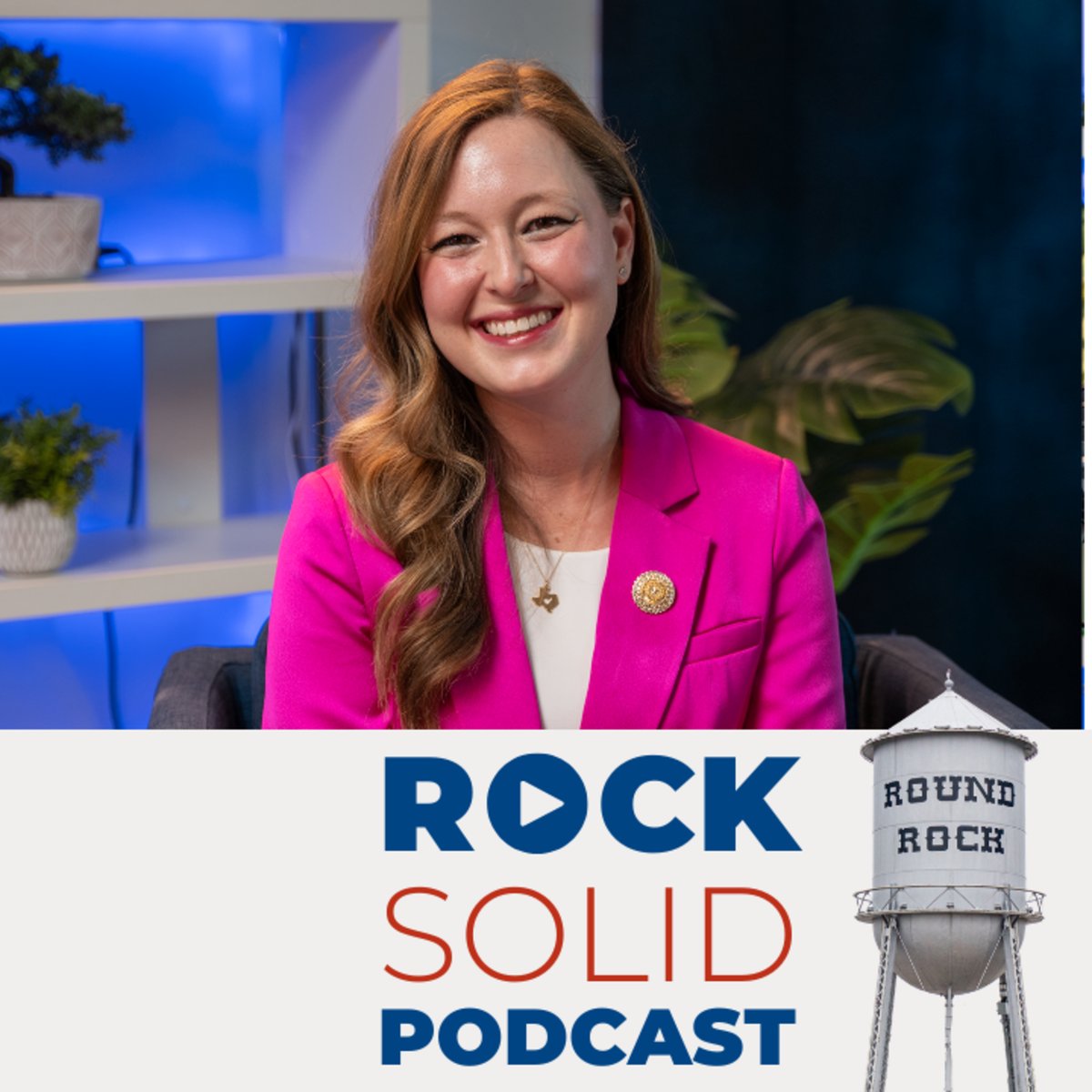
Rock Solid: Round Rock Business Leaders Podcast — 78. Caroline Harris Davila | From Round Rock Kid to State Representative
Photo: Round Rock Studio
“My first speech I ever gave when I was running for office, I almost threw up right after. I mean, I was just petrified. I was shaking... it really was one of the top reasons of why I didn't even want to run because I just didn't think I would be able to communicate.”
Episode 78 of Rock Solid: Round Rock Business Leaders Podcast, titled Caroline Harris Davila | From Round Rock Kid to State Representative, hosted by Bryan Eisenberg, brings listeners an unusually personal conversation with one of the youngest members of the Texas House. Aired on June 16, 2026, the episode presents Rep. Caroline Harris Davila as a neighbor who overcame financial and personal challenges to become Round Rock's voice.
The conversation moves quickly past politics and into the texture of civic life in Round Rock. Listeners can expect specific threads on:
Rock Solid: Round Rock Business Leaders Podcast — 78. Caroline Harris Davila | From Round Rock Kid to State Representative
Photo: Round Rock Studio
“My first speech I ever gave when I was running for office, I almost threw up right after. I mean, I was just petrified. I was shaking... it really was one of the top reasons of why I didn't even want to run because I just didn't think I would be able to communicate.”
- Growing up as a pastor's kid alongside Mark Westerfield of Central Baptist Church and the faith-based service that shaped her worldview
- The mechanics of a part-time Texas legislature that pays $600 a month and convenes 140 days every other year
- Housing affordability, trade school pathways like TSTC in Hutto, and keeping young talent in Central Texas
- How nonprofits, including Will Williams' work distributing power wheelchairs to veterans, plug into her office
Harris Davila is candid about the gap between her public confidence and how she started. She tells Eisenberg she was not good at public speaking, the campaign side was foreign even after seven years working at the Capitol, and the leap felt impossible.
My first speech I ever gave when I was running for office, I almost threw up right after. I mean, I was just petrified. I was shaking... it really was one of the top reasons of why I didn't even want to run because I just didn't think I would be able to communicate.
She credits her parents, her grandparents (still living next door at 90 and 95), and her faith for pushing her past it.
The episode digs into the daily reality of constituent service that rarely makes headlines. Harris Davila says the most common request her office handles is help securing a driver license appointment, but the range stretches to extraordinary cases, including a family that needed help streamlining an autopsy for a loved one. She notes that Over 95% of Texas House initiatives are bipartisan, a surprising statistic for those familiar with national politics. She also describes her role as a connector, linking constituents to nonprofits, sponsoring silent auction items, arranging flags flown over the Capitol, and recruiting young people nationally to run for local office through a group she works with on candidate development.
About Rock Solid: Round Rock Business Leaders Podcast
Produced by Round Rock Studio and hosted by bestselling author and keynote speaker Bryan Eisenberg, Rock Solid spotlights the entrepreneurs, nonprofits, and civic leaders building one of Central Texas's fastest-growing communities. From startups to longtime institutions, each conversation captures the people and stories behind Round Rock's neighbor-helping-neighbor culture. Episode 78 is available now wherever podcasts are heard.
Frequently Asked Questions
- How old was Caroline Harris Davila when she first ran for office, and what made her decide to do it?
- Harris Davila was 27 when she first ran. She tells Eisenberg she was sitting in her former boss's office working on policy when she took stock of her community and felt it wasn't trending toward a bright future. Initially she only wanted to volunteer or hold signs, but neighbors, and then her parents, pushed her to run herself.
- What does the Texas legislature actually pay, and how does that shape her schedule?
- Representatives earn $600 a month, and the legislature convenes in Austin for 140 days every other year, with 60 to 80-hour weeks during session. Most of her colleagues hold separate 9-to-5 jobs in the off years, but Harris Davila has made constituent service her full-time work, logging roughly 40 hours a week between events and meetings.
- What kinds of requests does her constituent office handle?
- The most common request is help securing a driver license appointment, since some constituents are quoted six-month waits. The range extends to emergencies, including a family that needed help streamlining an autopsy for a loved one who had passed away. She also connects constituents to nonprofits and other community resources when her office can't directly help.
- How does Harris Davila work with local nonprofits like Will Williams' organization?
- She stays approachable by attending community events, then sponsors causes, donates silent auction items, or arranges flags flown over the Capitol. She specifically supports Will Williams' work distributing power wheelchairs and scooters to veterans, even storing extra equipment at her own house in her garage and in rooms her daughter no longer uses.
- Why does she emphasize that over 95% of House work is bipartisan?
- Harris Davila says people watching national politics assume nothing gets done, but in the Texas House the overwhelming majority of legislation is bipartisan. She uses the statistic to argue that relationships and people skills, which she worries social media and AI are eroding, remain the real engine of governance, and it's a lesson she wants to pass to younger civic leaders.
- What does she identify as the biggest concerns she hears from young people in Round Rock?
- She hears two recurring worries: job prospects after college, with some friends' kids holding high-level degrees but unable to find work, and housing affordability in a community that's grown more expensive than when she was growing up. She points to trade pathways like TSTC in Hutto, where her brother earned a welding degree, as one answer.
Media Contact

Other Recent News for Bryan Eisenberg, bestselling author, international keynote speaker
- Leadership and Innovation: How Kasey Jorgenson is Transforming Real Estate with AI
- Leadership and Legacy: Kristin Stevens on the Future of Round Rock
- Behind the Lens: David Valdez's Stories from the Berlin Wall to Texas Photography
- How Judge Steve Snell is Steering Williamson County's Growth
- Pioneering Marketer Bryan Eisenberg to Discuss AI's Impact on Customer Engagement at YOU x AI Summit