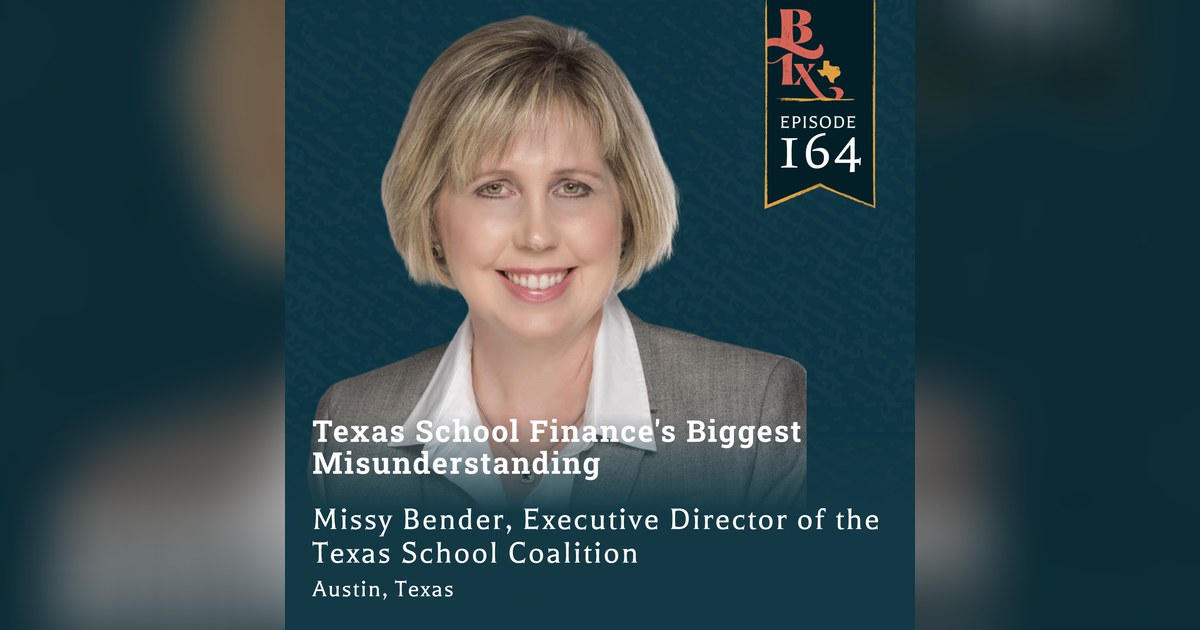
Recapture Isn't Robin Hood: Missy Bender Unpacks Texas' $3B School Finance Myth
Texas School Coalition Executive Director Missy Bender joins host Justin McKenzie to explain where the nearly $3 billion Texas schools paid in recapture actually goes, why Austin ISD sent $770 million to the state, and why she stopped calling the system 'Robin Hood.'





Plano, TX (Newsworthy.ai) Saturday Jul 18, 2026 @ 7:30 AM CDT
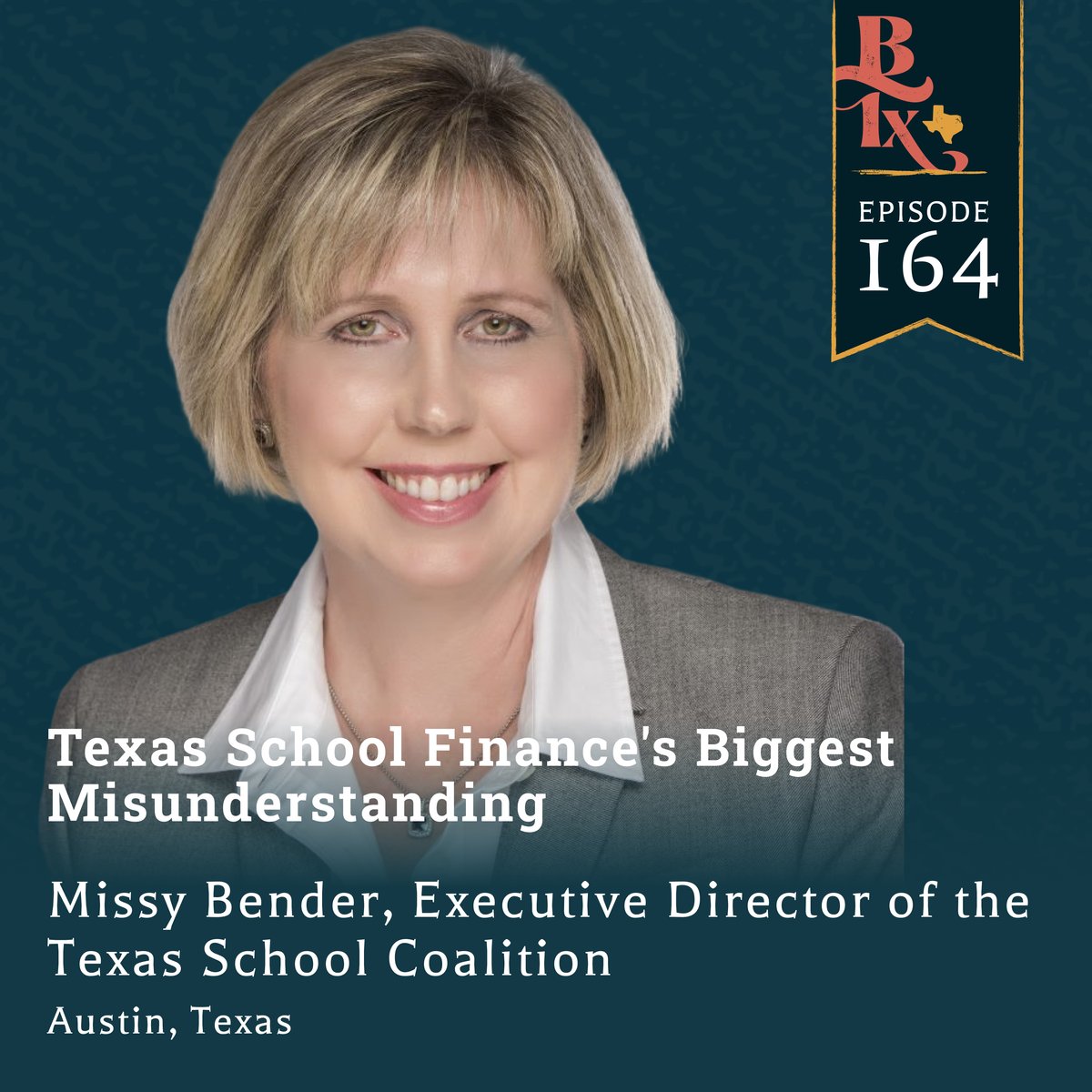
The Building Texas Show — Texas School Finance's Biggest Misunderstanding | Recapture Isn't Robin Hood
Photo: Justin McKenzie
“So what does recapture do? It generates state savings. That's why I don't call it Robin Hood anymore. It's not the property wealthy helping the property poor, like many think, but it's only helping the state.”
The latest episode of The Building Texas Show, titled Texas School Finance's Biggest Misunderstanding: Recapture Isn't Robin Hood, hosted by Justin McKenzie, dismantles one of the state's most persistent policy myths. Published July 13, 2026, the conversation with Missy Bender, Executive Director of the Texas School Coalition, drills into where the nearly $3 billion Texas schools sent back to the state in 2025 through recapture actually ends up. With about 20% of all Texas districts now paying, and roll calls of urban and rural payers growing, the episode arrives as legislators head into election season.
Recorded in Plano, the discussion breaks down the mechanics and consequences of the post-House Bill 3 formula in plain language. Listeners can expect three specific threads:
The Building Texas Show — Texas School Finance's Biggest Misunderstanding | Recapture Isn't Robin Hood
Photo: Justin McKenzie
“So what does recapture do? It generates state savings. That's why I don't call it Robin Hood anymore. It's not the property wealthy helping the property poor, like many think, but it's only helping the state.”
- How property valuation divided by average daily attendance triggers the recapture threshold, and why declining enrollment plus rising valuations create a "double whammy" for districts like Plano ISD.
- The 2025 top payers, including Austin ISD at $770 million and West Texas oil district Pecos-Barstow-Toyah at $198 million.
- Why a student leaving for a doctor's appointment can cost a district a full day of state funding, even when the absence is excused.
Bender, a former Plano school board member turned statewide advocate, is blunt about the misconception baked into the program's nickname. "So what does recapture do? It generates state savings," she tells McKenzie. "That's why I don't call it Robin Hood anymore. It's not the property wealthy helping the property poor, like many think, but it's only helping the state." She adds that some boards have considered withholding payment as a form of protest, but warns, "you can actually go to jail for doing that." The exchange reframes a debate most Texans have only encountered as a tax-bill line item.
The deeper policy conversation traces the money's path into the Foundation School Program (FSP) and out again as reduced state contributions, funds Bender says can then be redirected to "water, transportation, it could be vouchers, it could be anything." She cites the funding adequacy study led by Dr. Lori Taylor at Texas A&M, notes that the Legislature went six years without increasing the basic allotment despite inflation, and argues that 96% attendance, once religious and medical absences are counted, should be treated as the practical ceiling. She also flags legislation she is working on to stop penalizing districts for excused partial-day absences.
About The Building Texas Show
The Building Texas Show, hosted by Justin McKenzie, spotlights the operators, advocates, and civic leaders shaping the state's future through candid, long-form conversation. From public policy and education finance to entrepreneurship and community building, each weekly episode digs into how Texans are making the state stronger. New episodes release every week across YouTube, Facebook, Instagram, and LinkedIn. This episode is available now wherever podcasts are heard.
Frequently Asked Questions
- What is recapture and how is a Texas school district determined to owe it?
- Recapture is the mechanism requiring 'property-wealthy' Texas districts to send excess revenue back to the state. Under the formula updated by House Bill 3 in 2019, a district's total property valuation is divided by its average daily attendance. If that per-student property wealth exceeds a threshold set by the Texas Education Agency through statute, the district is considered property-wealthy and must pay recapture.
- Why does Missy Bender no longer call recapture 'Robin Hood'?
- Bender says the nickname is misleading because recapture dollars don't flow from property-wealthy districts to property-poor ones. Instead, the money enters the Foundation School Program account while the state reduces its own deposit by the same amount, generating state savings. In her words on the show, 'It's not the property wealthy helping the property poor... it's only helping the state.'
- Who were the top recapture payers in 2025?
- Texas districts paid just under $3 billion in recapture in 2025, generated by about 20% of all districts. Austin ISD led at $770 million, driven by climbing property values and steep enrollment declines. Pecos-Barstow-Toyah, a rural West Texas oil district, paid $198 million. Longtime payers like Plano and Highland Park have paid since the program's beginning, alongside Houston and Dallas.
- Why does student attendance matter so much to district budgets?
- State funding is tied to average daily attendance, so if a student is not present when attendance is taken, the district loses the revenue for that entire day, even if the absence is excused. Bender is pushing legislation to stop penalizing districts for excused partial-day absences and argues that roughly 96% attendance should be treated as the practical ceiling.
- What is the 'double whammy' Bender describes for districts like Plano?
- When a district's property valuations rise while student enrollment declines, the property-wealth-per-student ratio grows on both ends of the formula, pushing the district deeper into recapture. Plano has been subject to recapture from the beginning, and with statewide enrollment falling due to lower birth rates, reduced immigration, and school-choice shifts, many districts now face this compounding financial squeeze.
- How can Texans get involved or advocate on school finance issues?
- Bender recommends identifying your state representative and senator, asking candidates during election season how they view recapture, and following bills and votes once the Legislature convenes in mid-January. Voters can also call legislative offices, ask their school board about legislative priorities and advocacy programs, and visit txsc.org for resources and customizable communication tools.
Media Contact

Other Recent News for The Building Texas Show
- Beyond the Integration Tax: The idhubs Team is Rewiring the Business Operating System for the AI Era
- Fredericksburg High Students Raise $21K Launching Six Startups in INCubatoredu Debut
- From Jobsite to Pitmaster: Sloan Rinaldi's 1909 Texas BBQ Legacy
- San Marcos Buys 200 Acres to Extend Runway, Eyes Aerospace Future
- Why San Antonio Pool Buyers Are Ditching Concrete for Fiberglass