Burning Glass Study of 12M Workers Reveals Which Employers Actually Build Careers
On You Should Know, host William Tincup talks with Matt Sigelman of the Burning Glass Institute and Rajiv Chandrasekaran of the Schultz Family Foundation about Where You Work Matters, a data-driven ranking of 1,750 U.S. employers based on real career outcomes, not stated practices.






Boston, MA (Newsworthy.ai) Wednesday Aug 5, 2026 @ 10:40 AM CDT

You Should Know — How isolved and Remote Are Opening Global Hiring to SMBs
Photo: WRKdefined
“If two people start in the same role at directly competing firms, how likely are they each to move up? How likely are they each to stay? How does their pay change over time?”
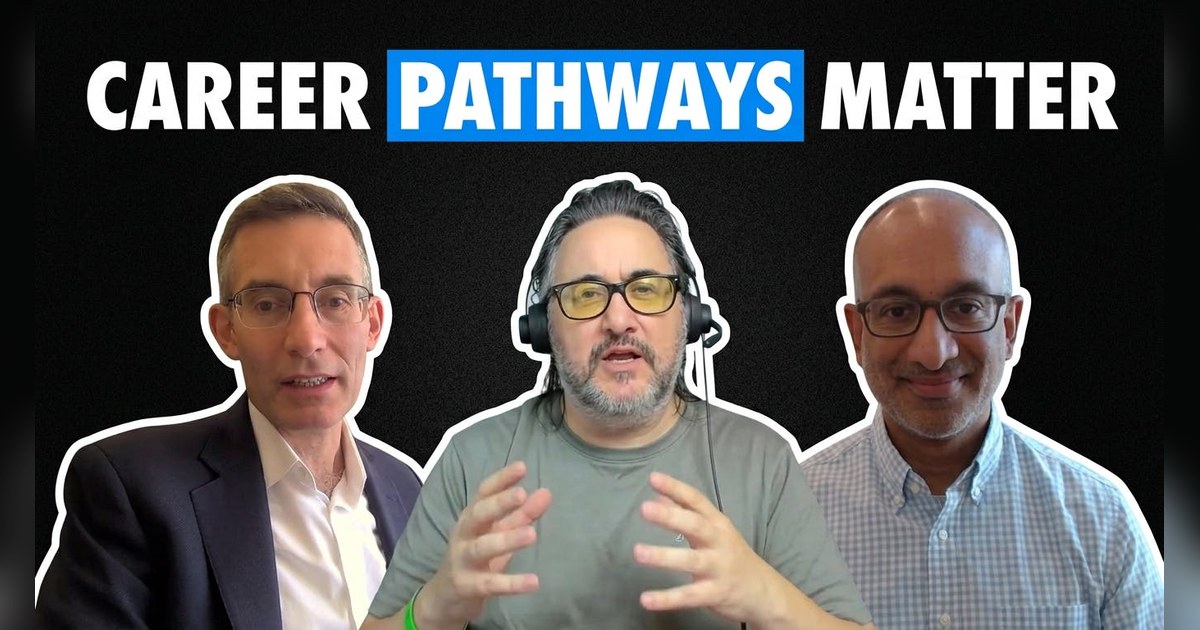
The latest episode of You Should Know, hosted by William Tincup of WRKdefined and published August 4, 2026, features a substantive conversation with Matt Sigelman, president of the Burning Glass Institute, and Rajiv Chandrasekaran, Managing Director of the Schultz Family Foundation. The trio unpacks Where You Work Matters, a newly expanded workforce analytics project that grades 1,750 of America's largest employers on the actual career outcomes of their workers. In a labor market where entry-level roles are eroding and AI is reshaping hiring, the discussion arrives at a moment of urgent relevance for HR leaders, workers, and job seekers.
Listeners get a detailed look at how the research works and what it exposes. Key threads include:
You Should Know — How isolved and Remote Are Opening Global Hiring to SMBs
Photo: WRKdefined
“If two people start in the same role at directly competing firms, how likely are they each to move up? How likely are they each to stay? How does their pay change over time?”
- How a database of 12 million career histories across 1,800 companies measures promotion velocity, retention, pay growth, and regrettable turnover.
- Why the disappearance of entry-level jobs, flagged in a recent Harvard Business Review article, threatens the future talent pipeline.
- The concept of "mobility muscle" and how firms like Procter & Gamble, Lockheed Martin, Salesforce, Apple, and Whole Foods stack up role by role.
Sigelman explains the methodology in plain terms, cutting through employer marketing claims to focus on empirical outcomes.
"If two people start in the same role at directly competing firms, how likely are they each to move up? How likely are they each to stay? How does their pay change over time?" Sigelman asks, describing the core question behind the American Opportunity Index and its successor project.
Tincup pushes back on conventional HR wisdom, arguing that regrettable turnover, not raw turnover, is the metric that matters. Chandrasekaran and Sigelman agree, and add that transparency benefits workers too.
The conversation goes deep on findings that defy expectations. Only 22 of roughly 1,750 companies earned Platinum ratings across every category measured. Of the hundreds of firms employing financial analysts, just 27 rated as great across early career, growth, and stability stages, and only six of those were in banking or financial services. Standouts included General Mills, Liberty Mutual, and Nike. At Whole Foods, food preparation workers fare surprisingly well because prepared foods drive margin. Chandrasekaran cites conversations with CHROs at top-rated firms who point to intentional manager conversations about career trajectory as the practice that separates leaders from laggards. The site now offers an occupation finder tool for the class of 2026, surfacing roughly 6,000 highly rated entry-level openings.
About You Should Know
You Should Know, from WRKdefined, is a podcast delving into pivotal leadership challenges in the workplace. With host William Tincup guiding candid conversations on workforce data, talent strategy, and the evolving world of work, the show engages HR leaders, executives, and anyone invested in how businesses treat their people. This episode is available now wherever podcasts are heard, and the full Where You Work Matters dataset can be explored at whereyouworkmatters.org.
Frequently Asked Questions
- What is Where You Work Matters and how does it differ from traditional 'best places to work' lists?
- Where You Work Matters is a workforce analytics project from the Burning Glass Institute and the Schultz Family Foundation that grades 1,750 of America's largest employers on actual career outcomes rather than self-reported practices or employee surveys. Drawn from a database of 12 million career histories, it measures promotion velocity, retention, and pay growth. As Tincup notes, unlike lists that companies can game, this data reflects what actually happens to workers.},{
- Why does Matt Sigelman say the erosion of entry-level jobs is an existential problem?
- Sigelman points to a shift in knowledge economy hiring away from entry-level roles toward mid-career and expert hires. Historically, workers built expertise by starting at the bottom and doing humble tasks until they became skilled. If that pathway disappears, employers face a talent pipeline crisis and young workers have no clear way to learn how to start a career in the middle.
- What did the research reveal about financial analyst roles across sectors?
- Of the hundreds of firms employing financial analysts that were assessed, only 27 rated as great across entry level, growth stage, and stability. Surprisingly, just six of those were in banks or financial services. Standouts included General Mills, Liberty Mutual, and Nike, showing that opportunity for a given occupation often exists in unexpected places outside the sector most associated with it.
- What is 'mobility muscle' and why does it matter as AI reshapes work?
- Mobility muscle refers to a company's ability to move talent both laterally and vertically through internal pathways. Sigelman and Chandrasekaran argue that as AI reshapes occupations, firms with strong mobility muscle can redeploy and preskill workers rather than laying them off and rehiring elsewhere. This changes the employer social contract from guaranteeing stability to guaranteeing effective redeployment.
- How consistent is employee experience within a single company?
- Not very. The average firm shows about an 80-percentile-point gap between its best and worst roles for worker opportunity. Sigelman cites Salesforce, where measured roles cluster between the 79th and 99th percentile, versus Apple, where roles range from the 99th percentile down to single digits. Only 22 of roughly 1,750 companies earned Platinum ratings across every category.
- What practice do top-rated CHROs credit for their strong outcomes?
- Chandrasekaran says that in conversations with CHROs at Platinum-rated companies, one theme emerged repeatedly: intentional manager conversations with workers about career trajectory. Great managers routinely ask employees what they want to do next and plan thoughtfully around it, and this behavior is embedded in the corporate culture at places like Procter & Gamble and Lockheed Martin rather than left to individual managers.
Media Contact

Other Recent News for You Should Know Podcast
- HiringBranch Study: Scoring Soft Skills Separately Weakens Frontline Hiring Predictions
- ServiceNow's John Phillips: Stop Measuring AI Adoption, Measure Work Outcomes
- Oyster Founder Tony Jamous: Fear-Based Leadership Is Quietly Sinking Companies
- Paper I-9s, AI Bias and $27K Fines: Where HR Compliance Breaks in 2026
- isolved and Remote Partner to Bring Global Hiring Infrastructure to SMBs